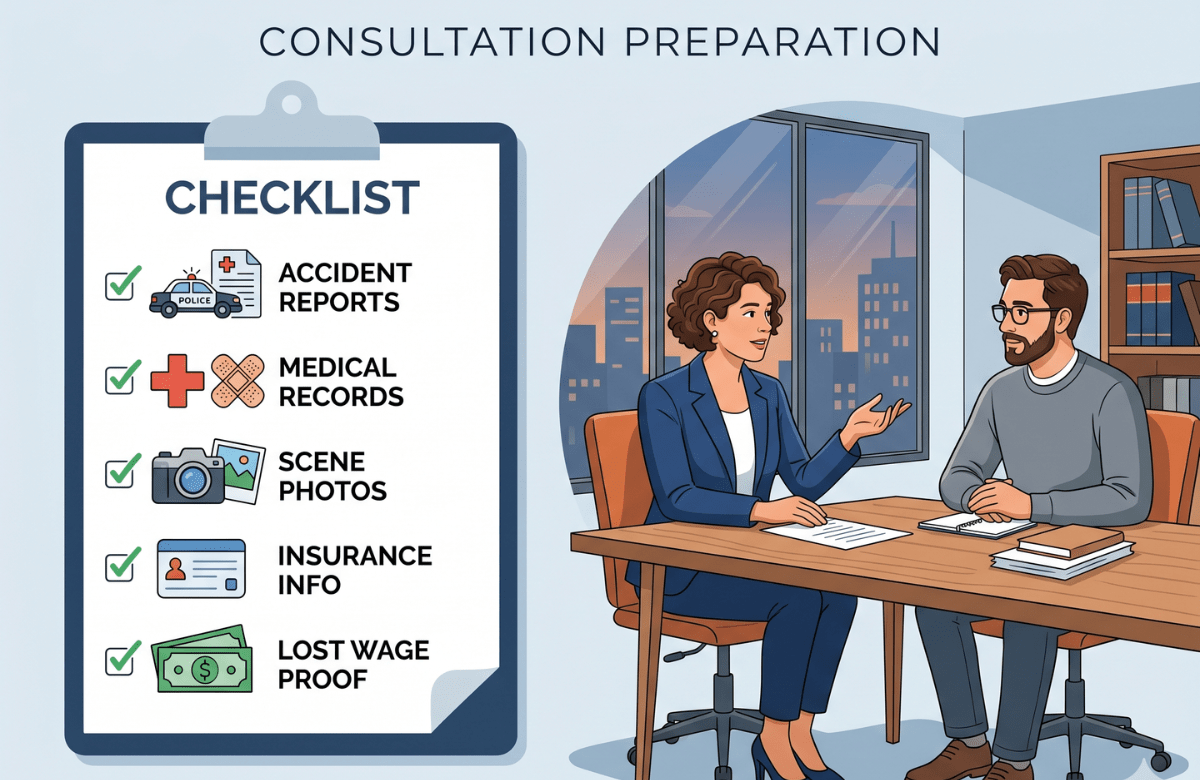
Walking into a law office for the first time can feel overwhelming, especially when you are recovering from an injury. However, the initial consultation is a vital step toward securing the compensation you deserve. To make the most of this meeting, coming prepared with the right documentation is essential.
The more information your attorney has at the outset, the faster they can evaluate your claim and begin building a strategy. Here is a checklist of materials to bring to your first appointment.
1. Reports and Official Documents
Objective records of the incident are the foundation of any case. These documents help establish exactly what happened and who may be at fault.
- Police or Accident Reports: If police responded to your car accident, bring a copy of the report or the “exchange of information” slip.
- Incident Reports: If you were injured in a store or business, bring any report you filed with management at the time.
- Workplace Records: For injuries occurring on the job, bring copies of the formal notice you provided to your employer.
2. Medical Evidence and Bills
In personal injury law, your medical records are the primary evidence of your “damages.” Your attorney needs to see the extent of your injuries and the treatment you’ve received.
- Doctor and Hospital Records: Bring discharge summaries, treatment plans, and any diagnostic results (like X-ray or MRI findings).
- Itemized Medical Bills: Keep track of every invoice from hospitals, physical therapists, and pharmacies.
- Future Treatment Recommendations: Documentation regarding any ongoing care or surgery your doctors have mentioned.
3. Evidence from the Scene
A picture is worth a thousand words in a legal claim. Visual evidence helps reconstruct the scene for insurance adjusters or a jury.
- Photos and Videos: Bring images of the vehicle damage, the location of the fall, or your visible injuries (such as bruising or casts).
- Witness Information: If anyone saw the accident, provide their names and contact information.
- Here’s a Tip: Do not worry if you don’t have everything yet. Bring what you have, and your legal team can help you gather the rest of the necessary documentation as the case progresses.
4. Insurance and Financial Information
To determine where a recovery might come from, your attorney needs to see all relevant insurance policies.
- Insurance Cards and Policies: Bring your health insurance card and, if applicable, your auto insurance declarations page.
- Correspondence: Have you received letters or emails from an insurance adjuster? Bring copies, but remember: never sign anything until your attorney reviews it.
- Proof of Lost Wages: If you missed work, bring recent pay stubs or documentation of your salary to help calculate lost income.
5. Your Own Account
Memory can fade over time. It is helpful to write down your own “narrative” of the event—including what you were doing right before the accident, what you felt during the impact, and how your life has changed since the injury.
This blog post is intended for general informational purposes and does not constitute legal advice. For specific questions about your case, please schedule a formal consultation.