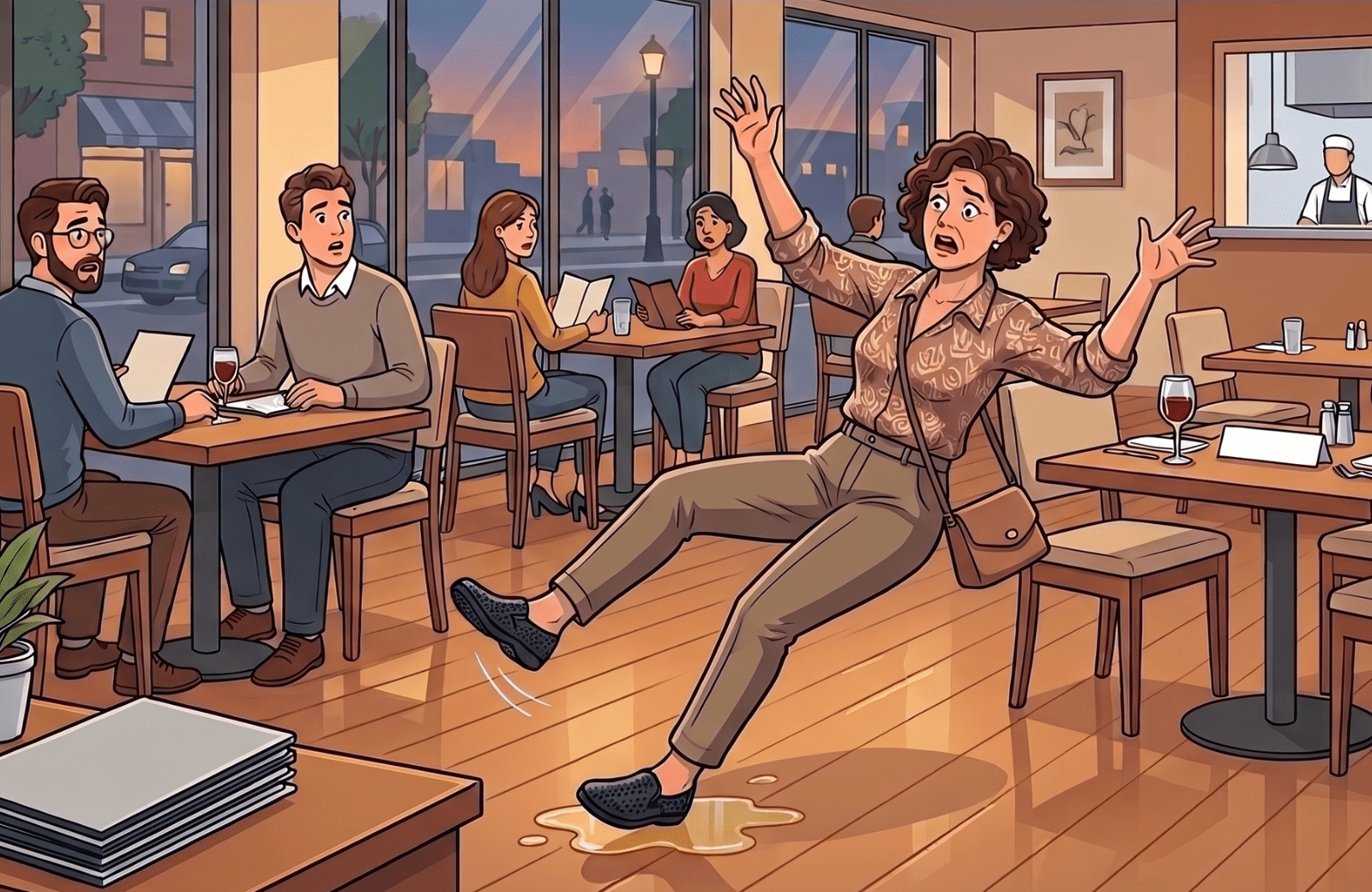
A single patch of ice, a freshly mopped floor with no warning sign, or an unanchored rug can change a life in a fraction of a second. Because stumbling or slipping is a common human experience, many people mistakenly view slip and fall accidents as minor embarrassments or simple instances of clumsiness.
The data tells a completely different story.
According to tracking from public health and safety organizations like the Centers for Disease Control and Prevention (CDC) and the National Floor Safety Institute (NFSI), slips, trips, and falls represent a major source of preventable injury in the United States.
Understanding the scope, costs, and common causes of falls is the first step toward prevention and securing authoritative legal guidance when property owners fail to keep their premises safe.
When a slip and fall occurs, the medical and financial repercussions can escalate rapidly. The baseline data for these incidents highlights a heavy burden on our healthcare infrastructure:
8.9 Million ER Visits: All types of falls combined account for an estimated 8.9 million emergency room visits every year across the country. Slips and falls specifically account for roughly 1 million of those emergency department visits.
Severe Physical Trauma: Falls are not just about bruises and sprains. They are the leading cause of traumatic brain injuries (TBIs) in the United States, accounting for over 47% of all TBI-related emergency department visits, hospitalizations, and deaths.
The Financial Toll: The financial impact of recovering from a fall-related injury is substantial. CDC data indicates that the average hospital cost associated with a slip and fall injury exceeds $30,000, a number that doesn’t account for long-term physical therapy or lost wages.
While a fall can happen to anyone, older adults face the highest risk of severe, life-altering complications or permanent loss of independence.
More than 1 in 4 adults aged 65 and older fall each year. Alarmingly, less than half of those who experience a fall report it to their doctor, even though suffering a single fall actively doubles the chances of falling again. These incidents result in roughly 3 million emergency department visits and approximately 1 million hospitalizations annually for our seniors.
The physiological impact on older demographics is uniquely severe:
Nearly 319,000 older Americans are hospitalized annually for hip fractures.
An estimated 95% of all hip fractures are caused by falling—most frequently from falling sideways.
Due to these severe complications, adults aged 65 and older account for four times more fall fatalities than all other age groups combined, making falls the leading cause of injury-related death for this demographic.
Slips, trips, and falls (STFs) are not confined to domestic settings; they are a primary driver of workplace absences and industrial injuries, ranking second only to transportation accidents.
Occupational Impact: STF incidents represent about 25% to 27% of all non-fatal occupational injuries that result in days away from work, disrupting livelihoods and business productivity.
Workplace Fatalities: According to the Bureau of Labor Statistics (BLS), slips, trips, and falls account for roughly 16% of all occupational fatalities in general industry.
The Danger of Same-Level Falls: While falls from ladders or scaffolding are highly publicized, 75% of all STF injuries in retail and general commercial environments actually occur on the exact same level—such as slipping on a slick surface or tripping over a misplaced box.
High-Risk Sectors: Employees in wholesale and retail trade environments face elevated risks. For example, workers in grocery stores face a 75% higher rate of slip and fall injuries than the average of all other private industries combined.
Industry experts attribute the vast majority of slip and fall incidents to clear, preventable environmental variables and poor property maintenance.
Slippery Surfaces: Many slips, trips, and falls are caused by hazardous or slippery walking surfaces. This includes unaddressed liquid spills, accumulated ice or snow, and freshly mopped floors left unmarked.
Improper Footwear: Worn-out or inappropriate footwear accounts for some slip incidents, reinforcing the need for proper safety gear in commercial and industrial settings.
Property Maintenance Hazards: Some falls are heavily tied to poor environmental upkeep. Common culprits include loose rugs, uneven steps, a lack of secure handrails, poor lighting in stairwells, and unmanaged clutter or debris in public walkways.
Property owners, commercial businesses, and employers have a strict legal responsibility to maintain safe, hazard-free walkways for employees and the general public. When a business or landlord fails to clean up a known spill, leaves electrical cords exposed across a walkway, or neglects broken steps, their failure to act may constitute negligence.
If you or a loved one has suffered a severe injury due to a slip and fall, you shouldn’t have to carry the burden of medical bills and missed work alone. Contact Caldwell Law Group at caldwell-law.net for a free consultation to discuss your recovery options.