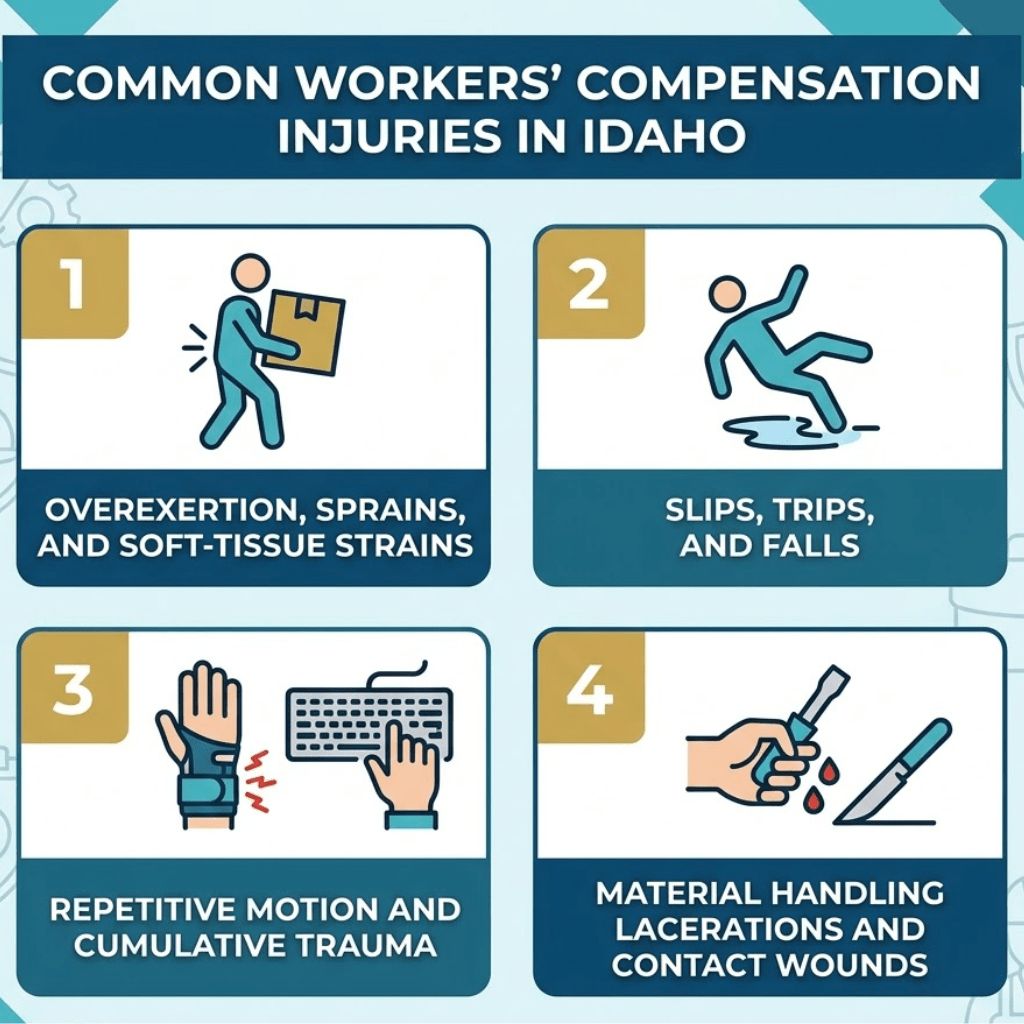
Nurses and healthcare professionals provide essential care across Idaho’s hospitals, clinics, and long-term care facilities. However, nursing consistently ranks among the most hazardous professions in the United States for non-fatal occupational injuries. Under the Idaho Worker’s Compensation Law (Idaho Code Title 72), injured nurses are entitled to statutory benefits regardless of fault, covering necessary medical treatment, wage replacement, and compensation for permanent disability.
Most Common Workplace Injuries Among Idaho Nurses
Nursing requires intense physical exertion, rapid response times, and constant interaction with equipment and unpredictable patient behaviors. The most frequent injuries resulting in workers’ compensation claims include:
-
Musculoskeletal Disorders (MSDs) and Spinal Strain
-
Causes: Manually lifting, transferring, or repositioning non-ambulatory patients; catching falling patients; prolonged awkward postures during surgical or bedside procedures.
-
Common Diagnoses: Lumbar and cervical disc herniations, severe thoracic strain, sciatica, and torn ligaments.
-
Shoulder and Rotator Cuff Tears
-
Causes: Reaching overhead to adjust equipment, pushing heavy gurneys or crash carts, and restraining disoriented patients.
-
Common Diagnoses: Rotator cuff impingements, labral tears, and chronic bursitis.
-
Slips, Trips, and Falls
-
Causes: Wet floors from spills, sterile washdowns, loose cords, and cluttered hallways in fast-paced clinical environments.
-
Common Diagnoses: Fractures (wrists, hips, ankles), knee meniscus injuries, concussions, and contusions.
-
Needlestick and Sharps Exposure
-
Causes: Recapping needles, handling disposal boxes, or sudden patient movement during injections and blood draws.
-
Risks & Treatment: Exposure to bloodborne pathogens (such as Hepatitis B, Hepatitis C, and HIV), requiring immediate emergency prophylactic treatment and ongoing diagnostic monitoring.
-
Workplace Violence and Physical Assault
-
Causes: Combative or disoriented patients experiencing acute trauma, altered mental states, or neurological episodes.
-
Common Diagnoses: Facial trauma, head injuries, contusions, and associated psychological trauma.
Key Workers’ Compensation Benefits Under Idaho Law
When a nurse suffers an injury in the course and scope of employment, Idaho’s workers’ compensation system provides specific statutory protections overseen by the Idaho Industrial Commission (IIC):
| Benefit Type |
Scope of Coverage |
| Medical Benefits |
100% coverage for all reasonable and necessary medical care related to the industrial injury, including emergency services, surgeries, physical therapy, and prescription medications. |
| Temporary Total Disability (TTD) |
Wage replacement paid while an injured worker is temporarily unable to work during recovery, generally calculated as a percentage of the average weekly wage. |
| Temporary Partial Disability (TPD) |
Differential wage replacement if a nurse returns on modified or light duty at reduced pay. |
| Permanent Impairment & Disability (PPI/PPD) |
Monetary awards for permanent loss of physical function or diminished earning capacity after reaching Maximum Medical Improvement (MMI). |
Critical Steps to Take Following a Nursing Workplace Injury
-
Seek Immediate Medical Attention: Report to the facility’s occupational health clinic or emergency department. Ensure the physician documents that the injury occurred on the job.
-
Provide Written Notice to Your Employer: Idaho Code § 72-701 requires written notice to the employer as soon as practicable, but no later than 60 days from the date of the accident. Immediate reporting prevents insurer disputes.
-
Accurately Detail the Mechanism of Injury: Describe the exact movements, equipment involved, or circumstances (e.g., patient weight, floor conditions) to prevent insurers from mischaracterizing the claim as a pre-existing or degenerative condition.
-
Follow Prescribed Restrictions: Strictly adhere to any physician-ordered work restrictions (e.g., lifting limits, standing limits) and provide copies directly to human resources.
If you or a loved one has suffered an injury during work and wants to know if they need an attorney to help them to secure their rights, call Caldwell Law Group, P.L.L.C. today to schedule a free, confidential consultation with a personal injury attorney.
Disclaimer: The information provided in this article is for educational and informational purposes only and does not constitute legal advice. Reading this post does not establish an attorney-client relationship. Every workers’ compensation claim involves unique facts and strict statutory deadlines. If you have questions about your rights under Idaho law, consult with a qualified attorney licensed in Idaho.